When people think of Tuscany, they often picture Chianti: vineyards, cypress-lined roads and stone villages between Florence and Siena. Beautiful, and rightly world-famous. But Tuscany also has a quieter side. East of Florence lies the Casentino, the green valley where the Arno rises, with ancient forests, monasteries and castles. That is where you will find Borgo Vista Serena. In this blog we put the two areas side by side: what makes them different, which one suits you, and how to enjoy the best of both.
In short
| Chianti | Casentino | |
|---|---|---|
| Location | Between Florence and Siena | North of Arezzo, east of Florence |
| Landscape | Rolling hills with vineyards, olive trees and cypresses | Green valley, beech forests, mountains of over 1,600 metres |
| Known for | Chianti Classico (the black rooster), wineries, villages such as Greve, Radda and Castellina | Foreste Casentinesi National Park, the monasteries of Camaldoli and La Verna, Poppi castle |
| Atmosphere | International, many visitors, especially in summer | Quiet, Italian, hardly any mass tourism |
| On your plate | Bistecca, pecorino, wine tastings | Tortelli di patate, prosciutto del Casentino, chestnuts, game and mushrooms |
| From the borgo | About 1 hour 15 to 1 hour 30 by car | You are right in the middle: Poppi is about half an hour away |
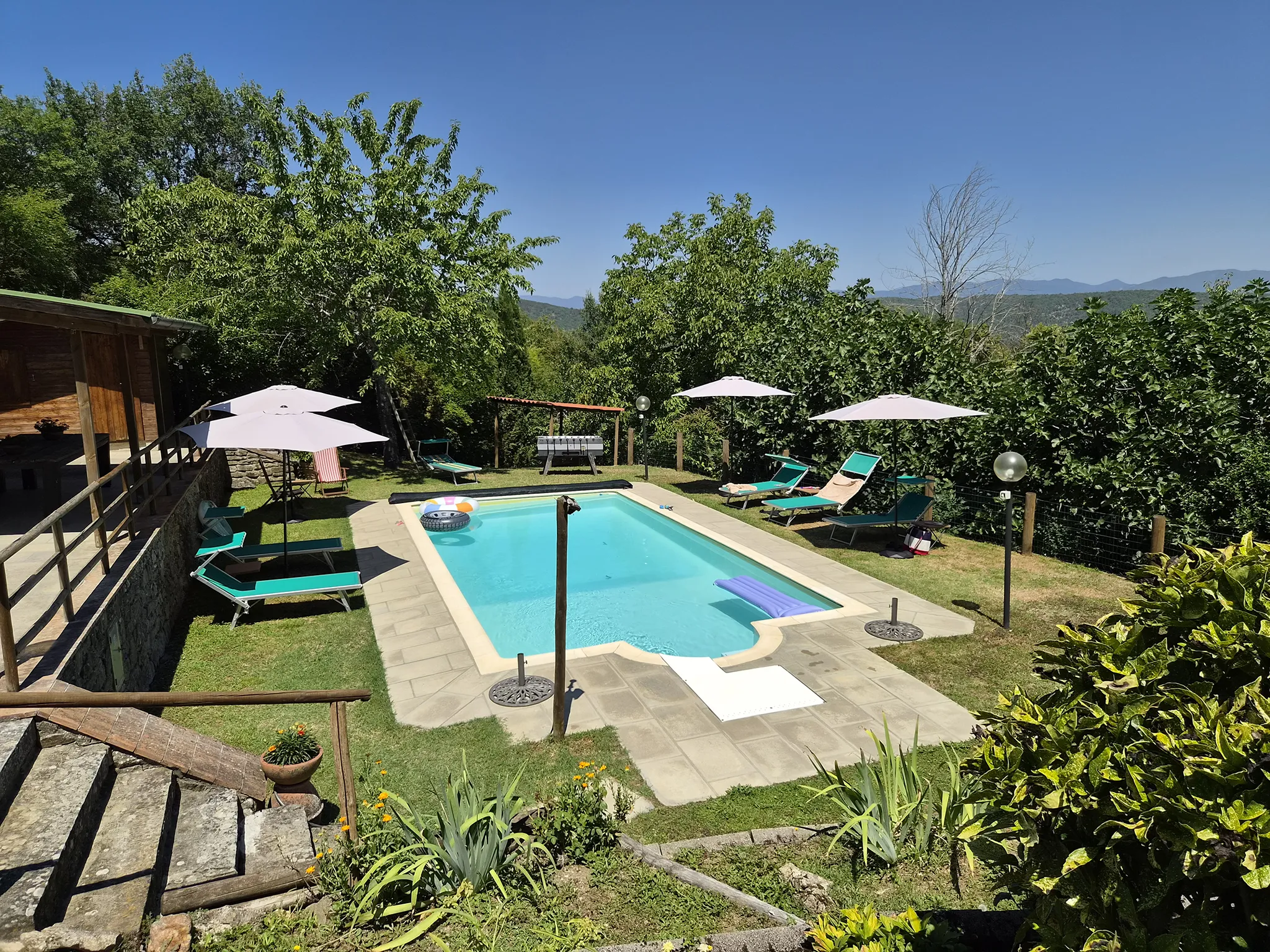
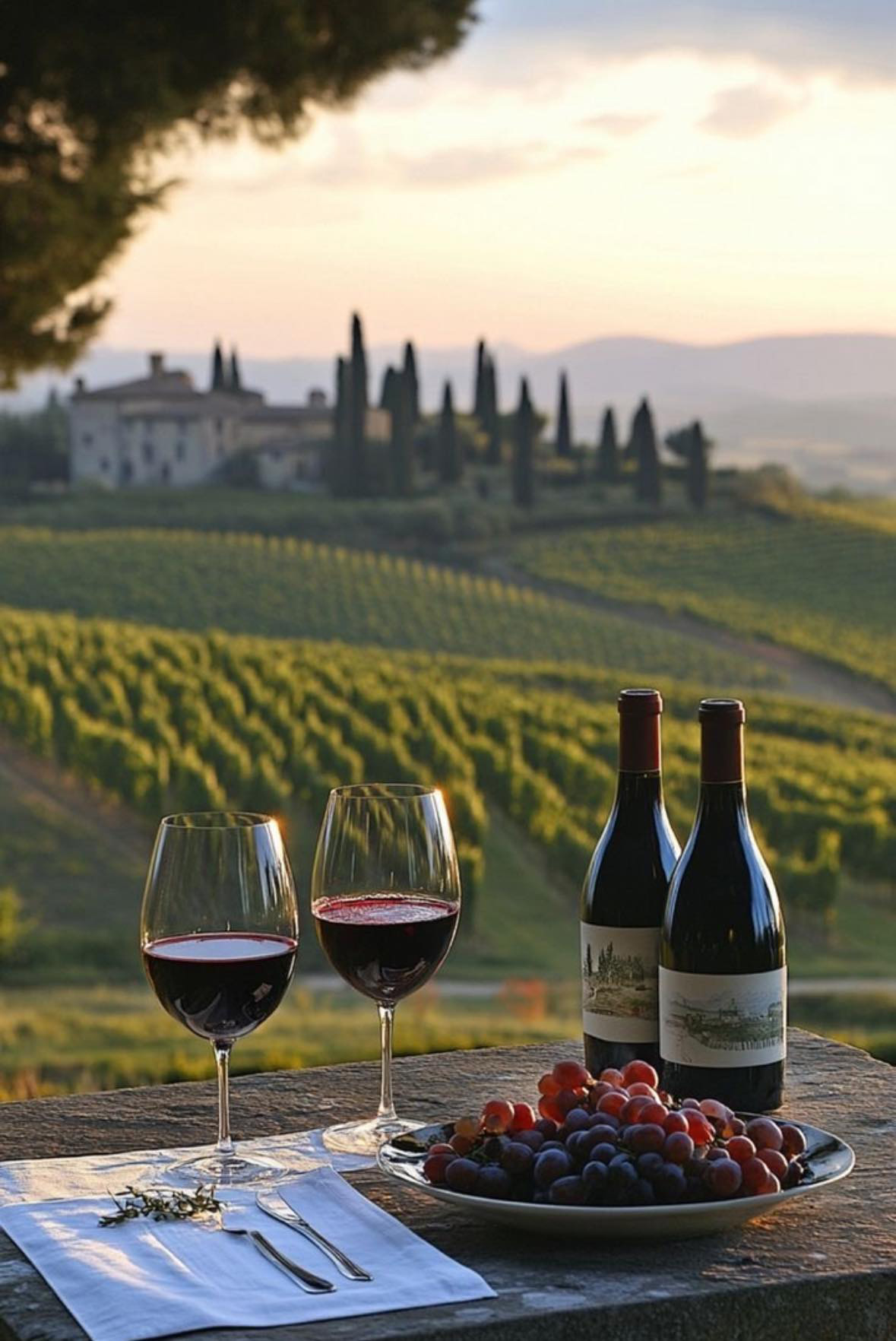
Chianti is the hill country between Florence and Siena, and for many people the very image of Tuscany. Its historic heart is the Chianti Classico area, with the villages of Greve, Radda, Castellina and Gaiole. You recognise the wine by the black rooster (gallo nero) on the neck of the bottle, and as early as 1716 Grand Duke Cosimo III de' Medici defined the borders of the wine area. Winding roads take you past wineries, castles and small squares with café terraces.
There is a flip side. Chianti is world-famous, and you notice it: in summer the roads and villages are busy, many wineries work with bookings and fixed time slots, and accommodation is often more expensive. If you are looking for peace and space, you are more likely to find it where fewer people go.
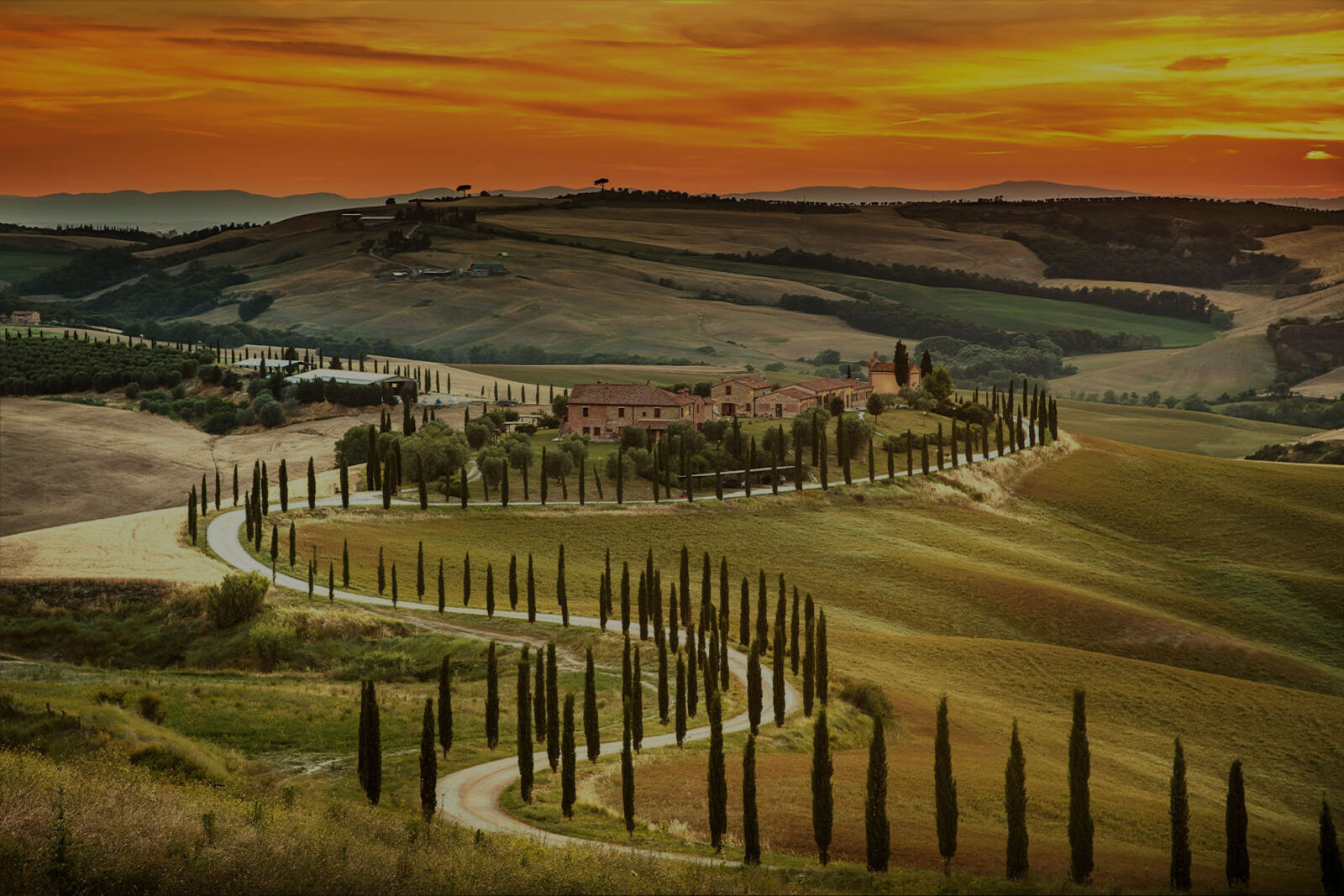
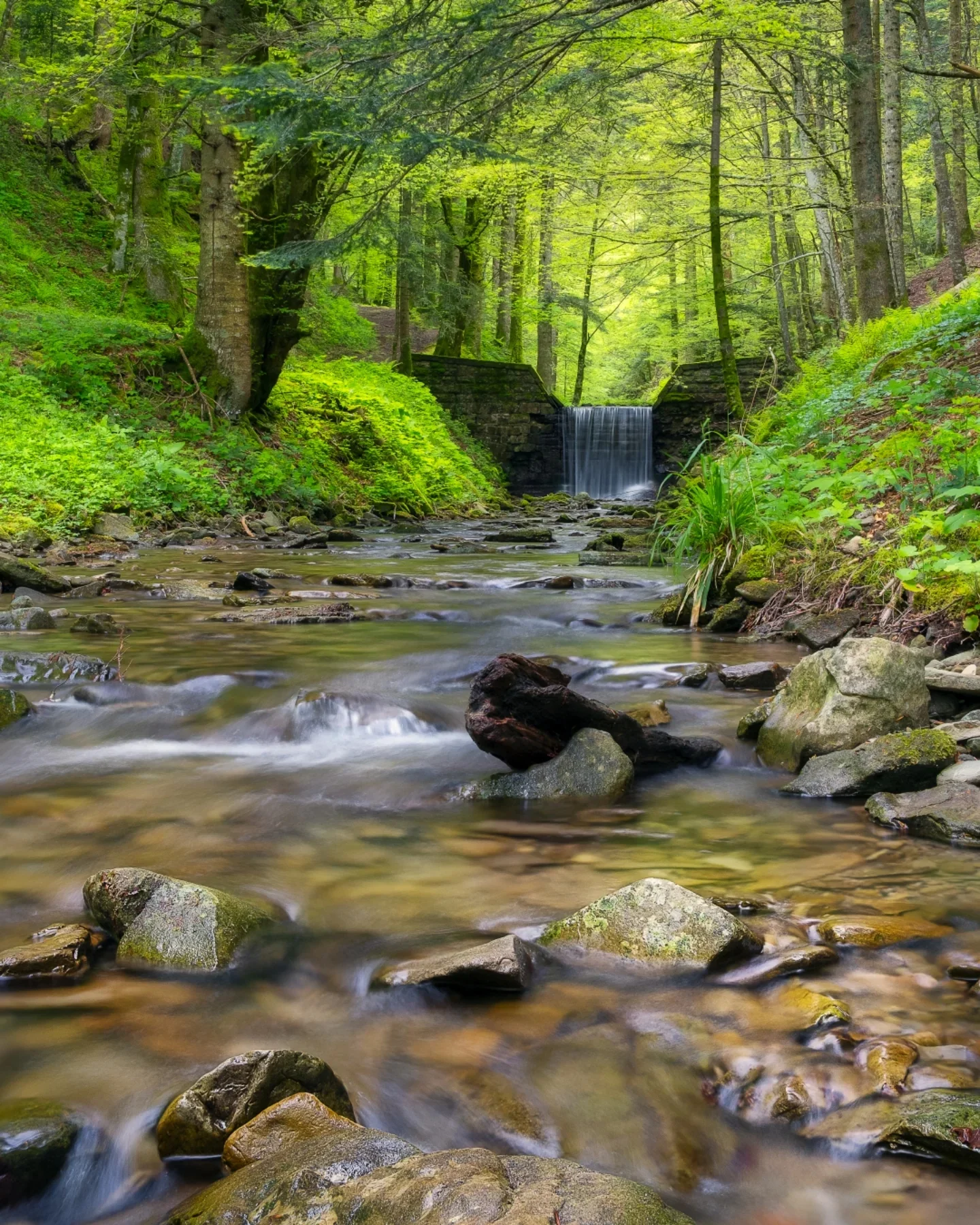
The Casentino is the valley of the upper Arno, between Arezzo and the mountains of the Apennines. The river rises here on Monte Falterona and flows on through Florence and Pisa to the sea. The valley is greener and wilder than Chianti, with dense forests on the slopes, medieval villages on the hills and castles that still look out over the valley. What makes it different above all: it is quiet here. You share the roads with Italians, not with coaches.
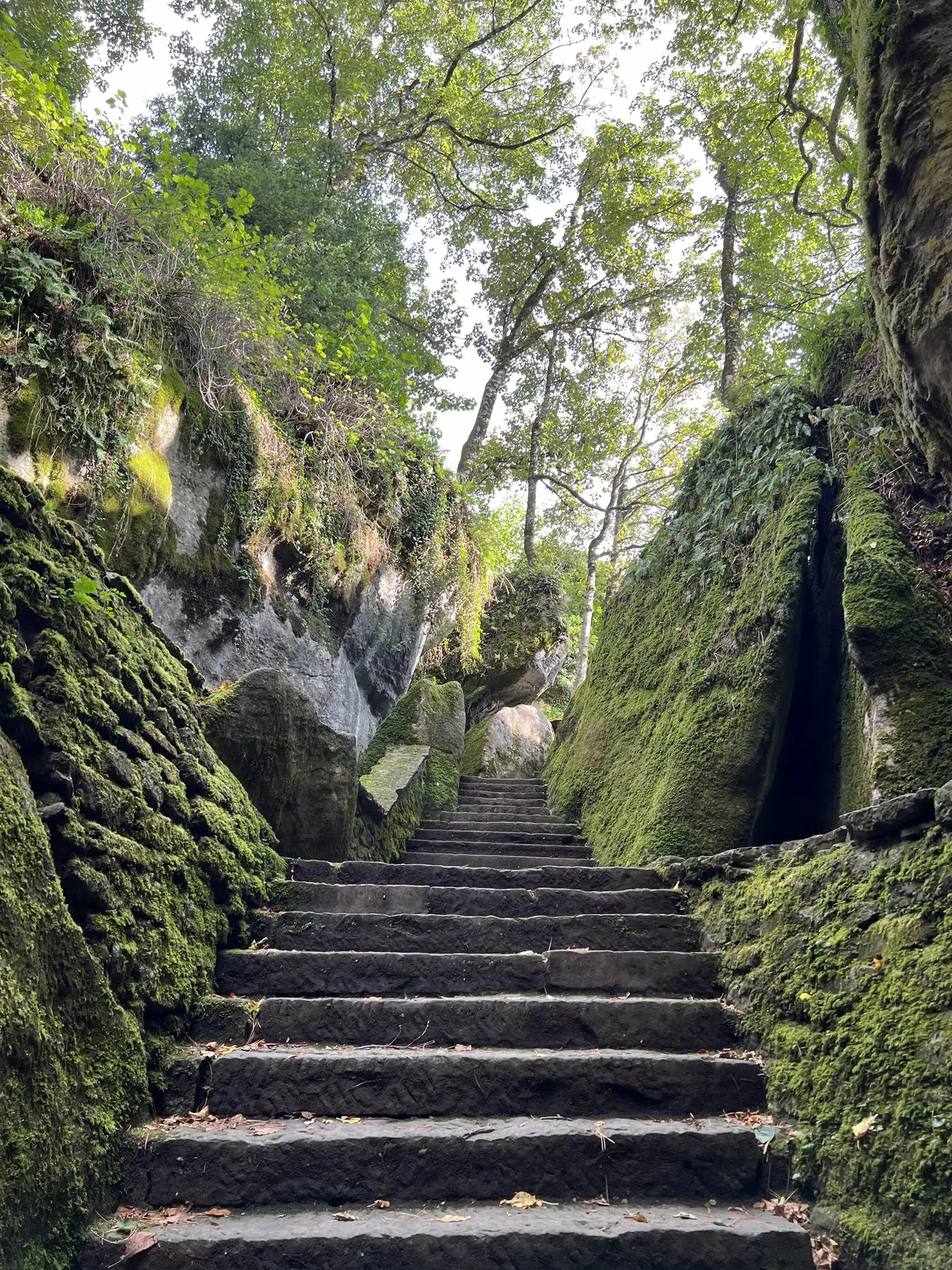
Much of the mountains belongs to the Foreste Casentinesi, Monte Falterona and Campigna National Park, protected since 1993 and covering more than 36,000 hectares. The park's ancient beech forests have been a UNESCO World Heritage Site since 2017, with at their heart the Sasso Fratino reserve, Italy's first strict nature reserve (1959). There are hundreds of kilometres of marked trails, and with a bit of luck you will see red deer, roe deer or a wild boar. In September and October you can hear the stags roaring in the forests.
Deep in the forests lie two of Italy's most remarkable monasteries. Camaldoli was founded in the early eleventh century by Saint Romuald. The lower monastery has a centuries-old pharmacy where you can still buy herbal liqueurs and soap, and higher up in the forest lies the hermitage. La Verna stands on a rocky plateau above the valley; this is where Francis of Assisi received the stigmata in 1224. Even if you are not religious, the place is impressive: the silence, the old beech trees and the view over the Casentino.
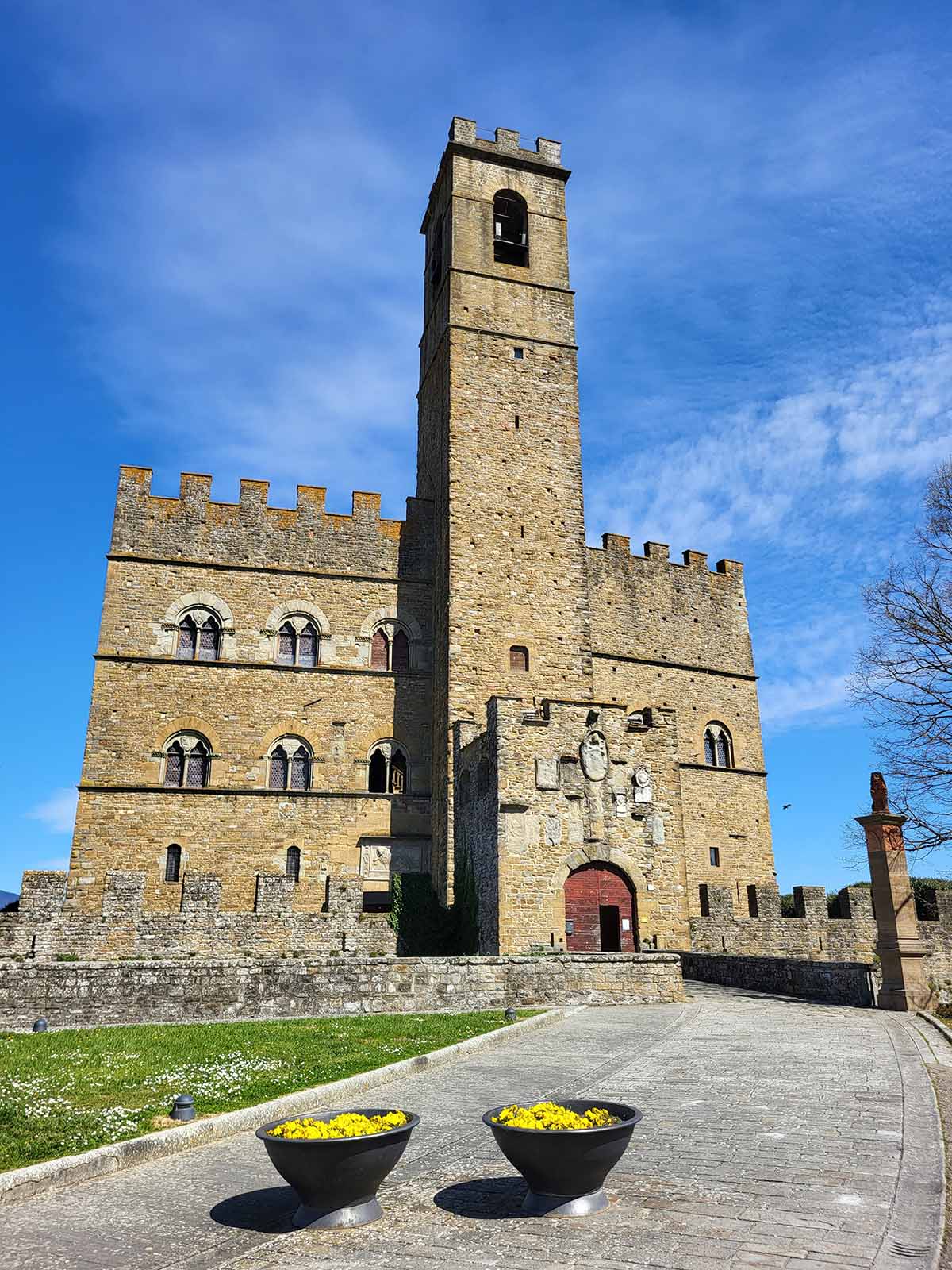
The landmark of the valley is the castle of Poppi, the Castello dei Conti Guidi, whose towers rise above the village. On the plain below, the Battle of Campaldino was fought in 1289, with the young Dante Alighieri among the soldiers. There is also the old town of Bibbiena, Stia with its museum of the famous panno casentino wool, the castle of Romena with its Romanesque church, and dozens of small villages where time seems to stand still.
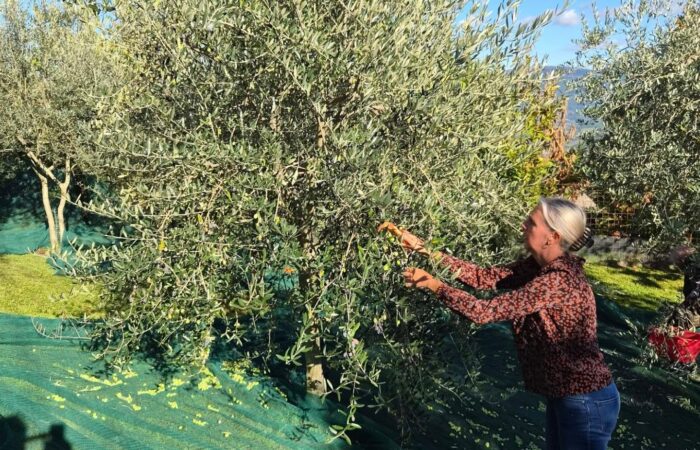
Casentino cooking is simple, hearty and seasonal. Be sure to try tortelli di patate (pasta filled with potato, often with a duck or game ragù), prosciutto del Casentino, chestnuts and castagnaccio (chestnut cake) in autumn, and mushrooms and truffles from the forests. The wine here does not come from Chianti but from the hills around Arezzo, and we make our own olive oil: read more in our blog about the olive harvest.
Choose Chianti if you…
Choose the Casentino if you…
You do not have to choose. From Borgo Vista Serena you drive via Arezzo and Montevarchi to the heart of Chianti in about an hour and a half. A lovely route is the Chianti triangle: start in Gaiole in Chianti and visit the old abbey of Badia a Coltibuono, drive on to Radda with its medieval lanes, and finish in Castellina or Greve. Plan one or two wine tastings and book them in advance. In the evening you drive back to the cool and quiet of the Casentino. You will find more ideas in our blog about day trips from the borgo.
Our tip: agree on who is driving, or choose a winery where you can also have lunch. Combine Chianti with Arezzo on the way back, or make it two days: one day of wine, one day of Siena.
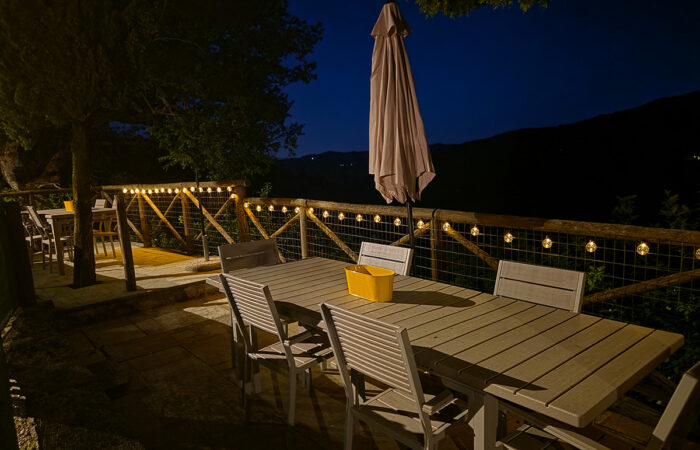
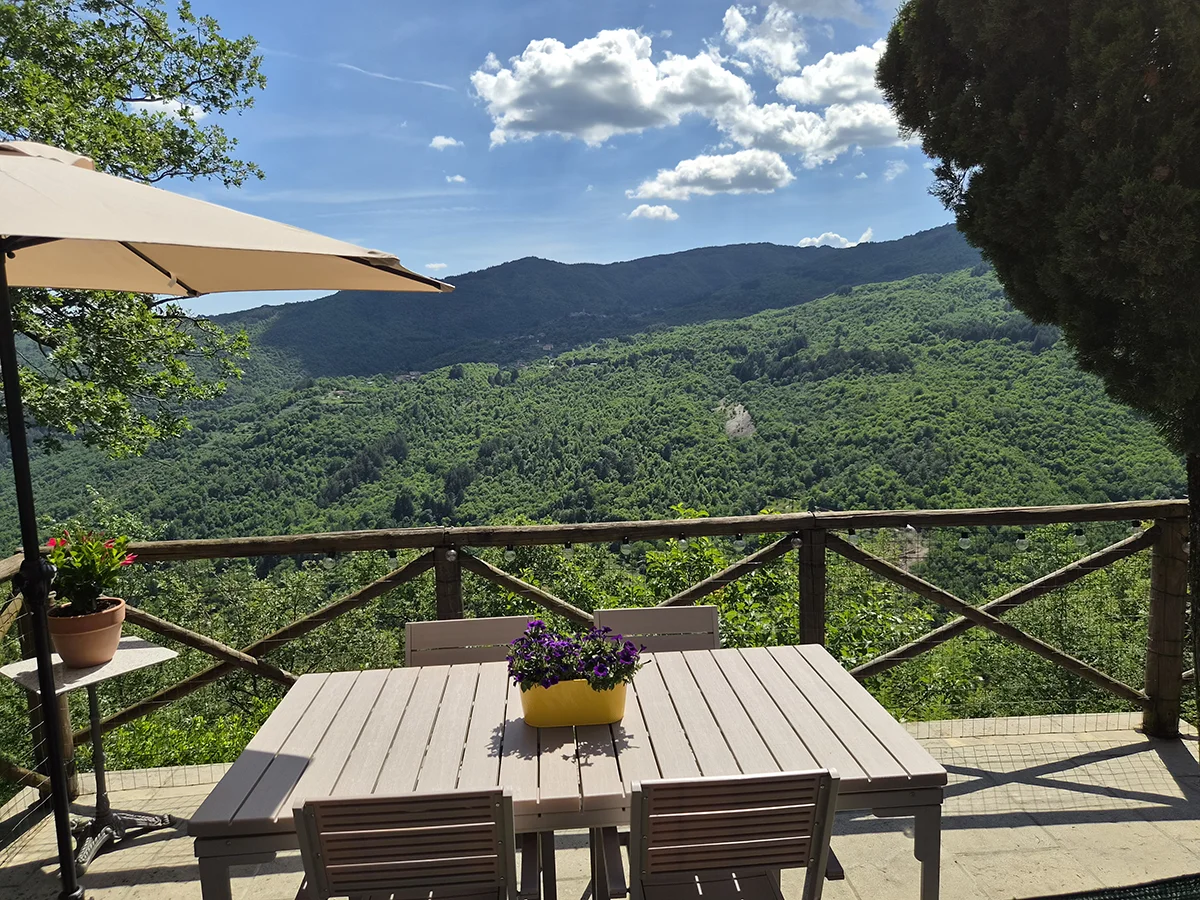
When we were looking for a place to welcome guests, we wanted the Tuscany people long for themselves: a terrace with a view, a glass of wine at sunset and nothing but crickets at night. We found it in the Casentino. From the borgo you look out over green hills, the roads are quiet and in the villages you are greeted like a neighbour. At the same time Arezzo is close by, and Florence, Siena and Chianti are within reach for a day trip. For us, that is the perfect balance.
Read more about walking in the area in our blog about hiking and nature around the borgo, and how to get here in driving to Tuscany.
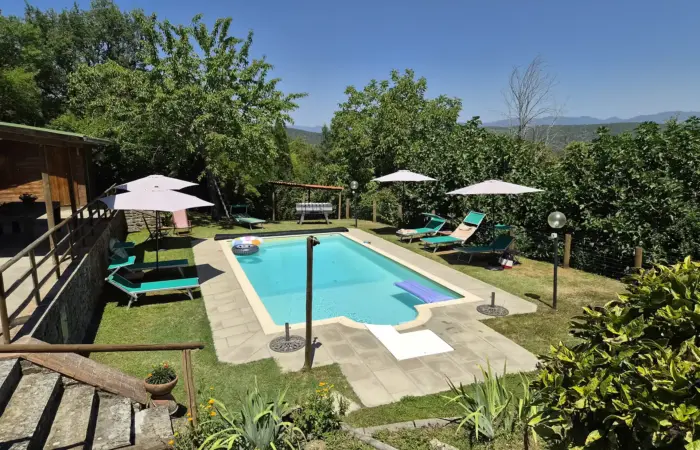
Three apartments, each with its own terrace, a pool with a view and Chianti within day-trip distance. Choose your dates and see straight away what is available.
Daniëlle and Martijn
Chianti lies between Florence and Siena and is known for wine, cypresses and famous villages. The Casentino lies north of Arezzo and is greener and wilder, with forests, mountains, monasteries and castles. Chianti is busier and more touristy; the Casentino is quieter and more authentic.
About an hour and a half by car to the heart of Chianti (Gaiole, Radda and Castellina), via Arezzo and Montevarchi. Easy to do as a day trip.
Definitely. You stay in the calm of the valley and make day trips to Arezzo (about 35 minutes), Florence, Siena and Chianti. That way you see the famous places as well as the Tuscany most tourists miss.
From April to October. Spring is green and fresh, in summer the forests stay pleasantly cool, and in autumn the beech trees turn red and gold and it is the season for chestnuts and mushrooms.
Yes, but the well-known wine areas lie just outside the valley. There are wineries around Arezzo, and Chianti and the Valdarno are easy to reach for a tasting.